Updated Oct 26, 2026
One season, many traditions
Late October and early November is a special time in many parts of the world. As the harvest ends and nights grow longer, people in very different cultures remember their dead, light fires and candles, share special foods and tell stories. Some of these celebrations are directly related to Halloween. Others are completely separate holidays that simply fall on nearby dates — and it is important not to lump them together.
This guide is an introduction, written for American readers, to how the season looks in other places. Customs vary a lot between regions, families and generations, so think of each section as a starting point rather than a complete picture.
Ireland: where it began
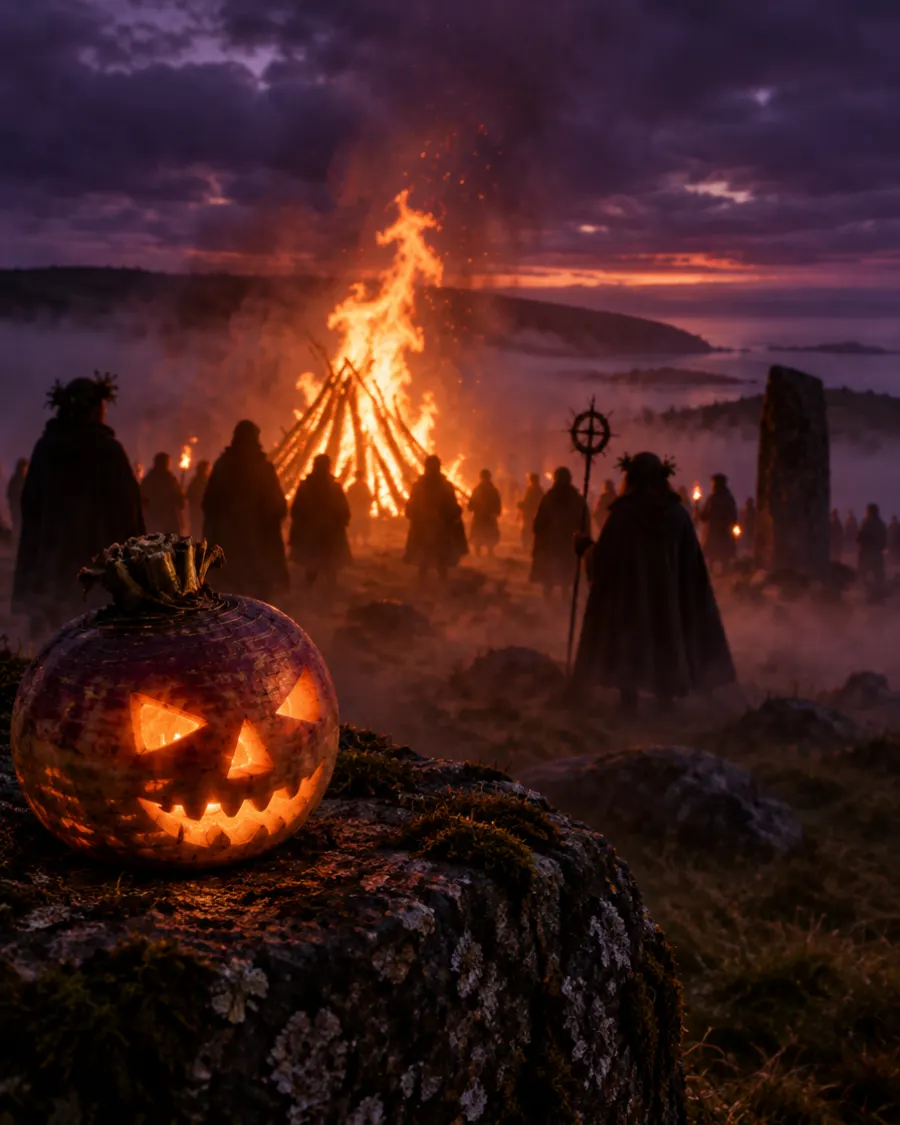
Ireland is often called the birthplace of Halloween. The old Gaelic festival of Samhain marked the end of the harvest and the start of winter, and its customs shaped much of what Americans now do on October 31. Learn more in our history of Halloween.
A traditional Irish Halloween food is barmbrack (often just called “brack”), a lightly sweet bread full of dried fruit. Small objects were baked inside, each with a playful meaning — finding a ring was said to mean marriage within the year. Many store-bought bracks still contain a ring today. Irish families also played fortune-telling and apple games, and bonfires remain part of the night in some areas.
The town of Derry in Northern Ireland is known for a large, multi-day Halloween festival with parades and fireworks; check the official city tourism site for current plans.
Scotland: guising and turnip lanterns
In Scotland, children traditionally went guising — dressing in disguise and visiting neighbors. Unlike American trick-or-treating, guisers were expected to earn their treat by performing: a song, a poem, a joke or a little dance. Many Scottish children still do this.
Lanterns were carved from turnips (“neeps” in Scots), a much harder job than carving a pumpkin. Families also played “dookin’ for apples” — trying to catch floating apples with your teeth — a game that came to America as bobbing for apples. Robert Burns described many old Scottish Halloween charms and games in his 1785 poem “Halloween,” which you can sample on our Halloween poems page.
Advertisement
England: Halloween and a separate Bonfire Night
Halloween is widely celebrated in England today, with costumes, pumpkins and trick-or-treating that look much like the American version. But many English families put even more energy into a different holiday a few days later: Bonfire Night, also called Guy Fawkes Night, on November 5.
Bonfire Night is not a Halloween tradition. It marks the failed Gunpowder Plot of 1605, when Guy Fawkes and other conspirators tried to blow up the Houses of Parliament in London. People light bonfires, set off fireworks and, in some places, burn a straw figure called a “guy.”
Because the two dates are so close, autumn in England can feel like a two-part festival — but the meanings are completely different.
Mexico and Latino communities: Día de los Muertos
Día de los Muertos (Day of the Dead) is one of Mexico’s most important holidays and is widely celebrated in Mexican American and other Latino communities across the United States. It is a different holiday from Halloween, with its own roots in Indigenous Mexican traditions blended with Catholic All Saints’ and All Souls’ Days. UNESCO recognizes the indigenous festivity dedicated to the dead as part of the world’s Intangible Cultural Heritage.
It is celebrated mainly on November 1 and 2. In many families, November 1 is set aside for children who have died and November 2 for adults. Rather than being frightening, the mood is warm and loving: the dead are welcomed home for a visit.
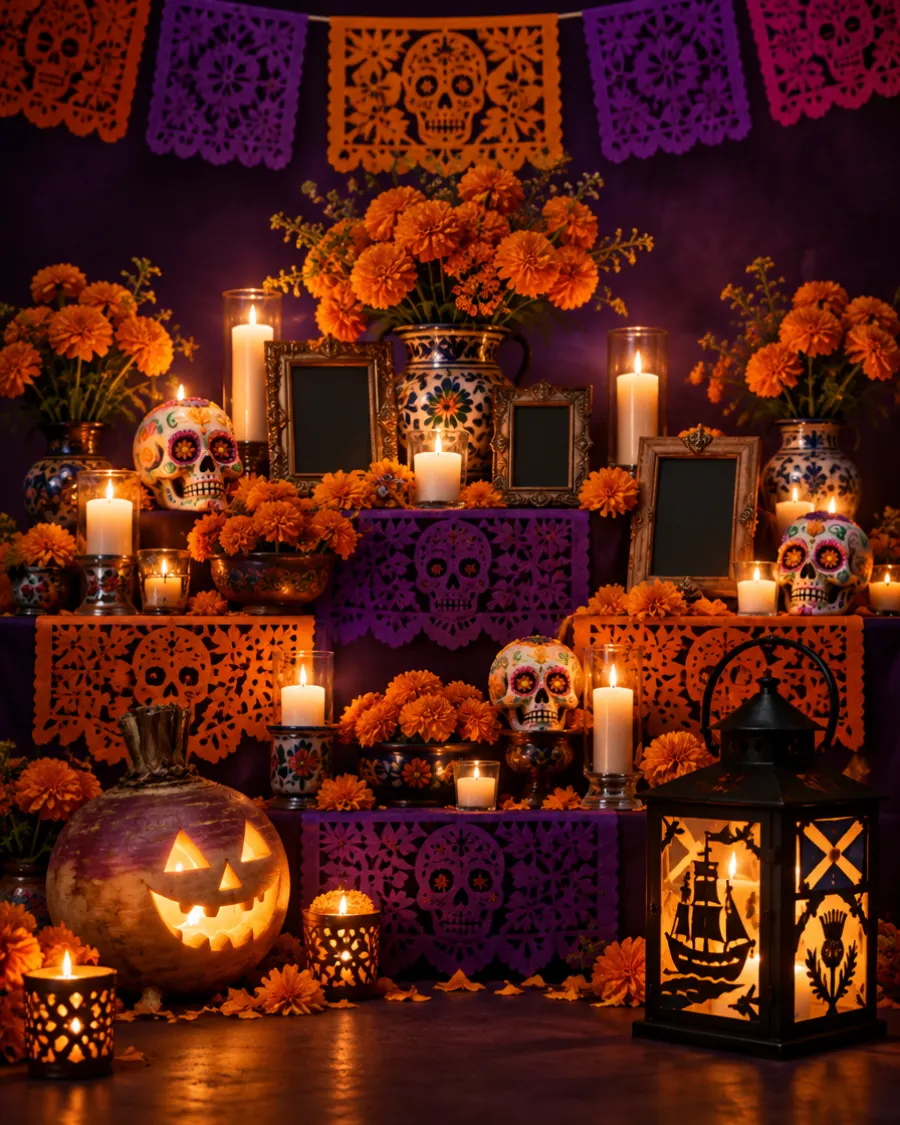
- Ofrendas — home altars decorated with photos of loved ones, candles, their favorite foods and drinks, and personal objects.
- Cempasúchil — bright orange marigolds, whose color and scent are said to guide spirits home. Petals are often scattered in paths.
- Pan de muerto — a sweet bread decorated with dough shaped like bones.
- Calaveras — decorated sugar skulls, often with a name written on the forehead, and playful written verses also called calaveras.
- Papel picado — colorful cut-paper banners strung over altars and streets.
- Families clean and decorate graves and may spend the night in the cemetery sharing food, music and memories.
Día de los Muertos is a family and religious observance. If you are not part of the culture, it is fine to learn about it and attend public events — but avoid treating it as just another “Halloween costume” theme, and follow the lead of the community hosting the celebration.
The Philippines and Guatemala
In the largely Catholic Philippines, early November is Undas, the time around All Saints’ Day and All Souls’ Day (November 1–2). Huge numbers of people travel back to their home provinces to visit family graves. They clean and repaint tombs, bring flowers and candles, pray together and often stay for hours or overnight, sharing meals at the cemetery. In some areas, an older house-to-house custom called pangangaluluwa, in which singers ask for food or gifts on behalf of the souls, recalls Europe’s old “souling.”
In Guatemala, the town of Sumpango is famous for its giant kite festival on November 1. Local groups spend months building enormous round kites (barriletes gigantes) from tissue paper and bamboo, with detailed designs that often carry cultural or social messages. Many are displayed in the town cemetery, and smaller kites are flown — a tradition often described as a way of sending messages to, or connecting with, the dead.
Japan: costumes in the city
Halloween arrived in Japan much more recently, and it looks quite different from the American holiday. There is very little door-to-door trick-or-treating. Instead, Halloween is mostly a costume event for young adults, with stores selling seasonal snacks and decorations and theme parks hosting special events.
Tokyo’s Shibuya district became famous for enormous street crowds in elaborate costumes. After problems with overcrowding and drunken behavior, local officials restricted drinking on the streets around the station and in recent years have asked people not to come to the area for Halloween. If you are traveling, check local guidance before planning a night out.
Germany and Italy
In Germany, October 31 is also Reformation Day, marking the date in 1517 when Martin Luther is said to have posted his Ninety-five Theses, and it is a public holiday in several German states. American-style Halloween with costumes and trick-or-treating grew popular in Germany in recent decades, especially among children and young adults. Burg Frankenstein, a castle ruin near Darmstadt, is known for its Halloween events — and for the (unproven) theory that it inspired Mary Shelley’s Frankenstein.
In Italy, the key days are Ognissanti (All Saints’ Day, November 1, a national holiday) and the Commemorazione dei defunti on November 2, when families visit cemeteries with flowers — chrysanthemums are closely associated with these days. Regional sweets mark the season, such as almond fave dei morti (“beans of the dead”) cookies. In parts of Sicily, children have traditionally received small gifts and sweets said to come from deceased relatives. Halloween costumes and parties have also caught on, especially in cities.
China and East Asia: the Hungry Ghost Festival
The Hungry Ghost Festival (Zhongyuan in Chinese tradition, related to the Buddhist Ullambana) is often called “Chinese Halloween,” but that comparison can mislead. It follows the lunar calendar, falling on the 15th day of the seventh lunar month — usually in August or early September, not late October. The whole seventh month is known as Ghost Month in many communities.
During this time, the gates of the underworld are believed to open and spirits wander among the living. Families honor ancestors and also make offerings for wandering spirits with no one to care for them: food set out on tables, incense, burned paper offerings and, in some places, floating lanterns on rivers. It is celebrated in mainland China, Taiwan, Hong Kong, Singapore, Malaysia and other places with Chinese communities, each with local customs. Many families also observe Qingming in spring to sweep ancestors’ graves.
Poland, Canada and a quick comparison
In Poland, November 1 (Wszystkich Świętych, All Saints’ Day) is a national holiday and one of the most important family days of the year. People travel long distances to visit the graves of relatives, bringing flowers and glass-covered candles called znicze. After dark, large cemeteries glow with thousands of small flames — a quiet, moving sight. November 2 is the Day of the Dead, or Zaduszki. Many other Catholic and Orthodox regions of Central and Eastern Europe have similar customs of tending graves and lighting candles in early November.
In Canada, Halloween looks very much like it does in the United States: costumes, jack-o’-lanterns, trick-or-treating on October 31 and haunted attractions. Both countries share the same Irish and Scottish immigrant roots.
- Costumes and candy: U.S., Canada, Ireland, the U.K. — and increasingly many other countries.
- Remembering the dead at home altars: Mexico and Latino communities (Día de los Muertos).
- Cemetery visits and candles: the Philippines, Poland, Italy and many Catholic countries.
- Spirits on a different calendar: the Hungry Ghost Festival in Chinese communities.
- Fireworks a few days later: Bonfire Night in Britain.
Curious about the date itself? See when is Halloween.
Celebrating respectfully
- 1Learn the name and meaningCall each holiday by its own name. Día de los Muertos is not “Mexican Halloween,” and the Hungry Ghost Festival is not “Chinese Halloween.”
- 2Ask before photographingAltars, graves and family gatherings are personal. Ask first, especially in cemeteries.
- 3Join public eventsMuseums, cultural centers and community festivals are great places to learn and take part as a guest.
- 4Skip sacred-image costumesAvoid costumes that turn religious or ethnic traditions into a party look. See our costume guide for ideas.
Frequently asked questions
Is Día de los Muertos the same as Halloween?
No. Día de los Muertos is a separate Mexican holiday on November 1–2 that honors and welcomes back deceased loved ones with altars, marigolds and family gatherings. It has its own Indigenous and Catholic roots.
Is Bonfire Night part of Halloween?
No. Bonfire Night on November 5 in Britain marks the failed Gunpowder Plot of 1605. It just happens to fall a few days after Halloween.
Which country celebrates Halloween the most?
Halloween is biggest in the United States, Canada, Ireland and the U.K., and has spread to many other countries. Ireland is considered its birthplace because of the Celtic festival of Samhain.
When is the Hungry Ghost Festival?
It follows the Chinese lunar calendar and falls on the 15th day of the seventh lunar month, usually in August or early September — not on October 31.
Advertisement