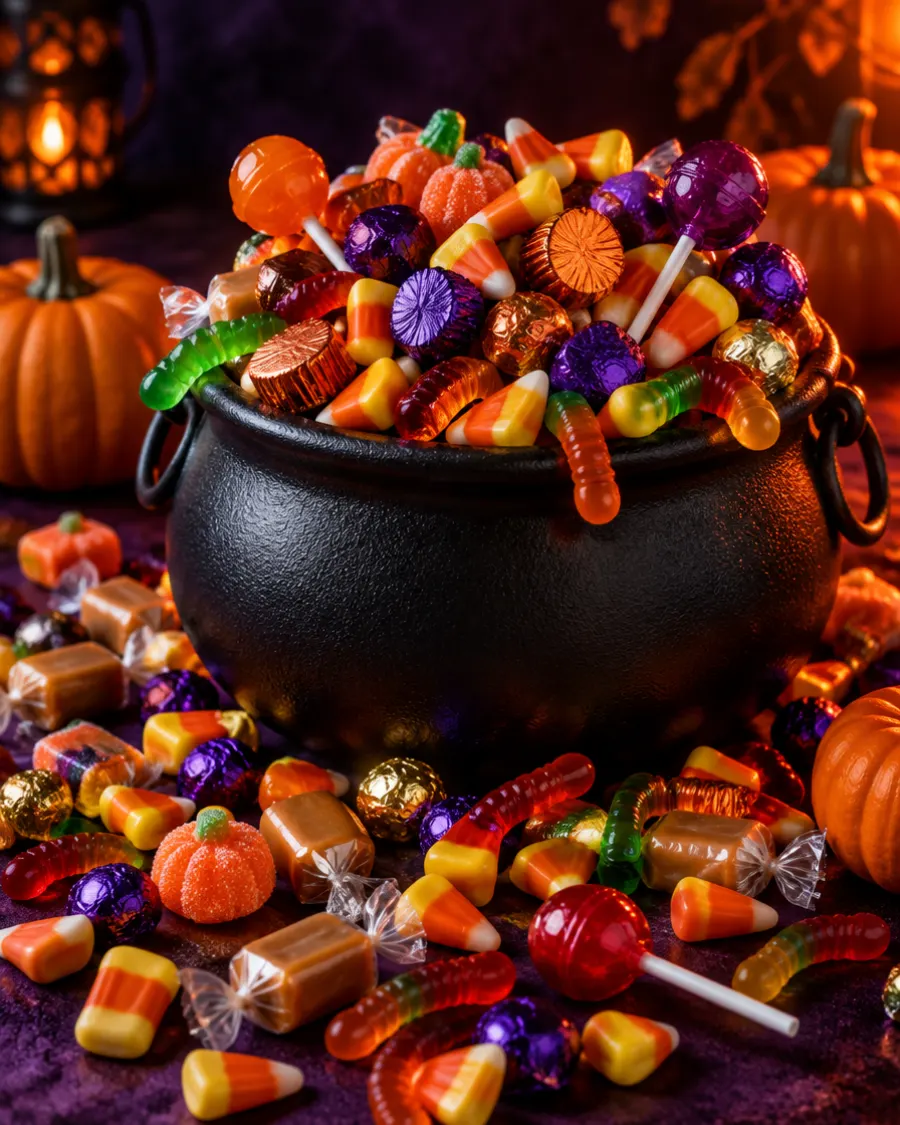
Updated Oct 26, 2026
How candy became the Halloween treat
Early trick-or-treaters did not always get candy. In the first half of the 1900s, households handed out whatever they had: apples, nuts, homemade cookies and popcorn balls, small toys or coins. During World War II, sugar rationing made sweets scarce.
After the war, as trick-or-treating boomed in new suburbs, candy makers began actively marketing Halloween. Small, individually wrapped pieces were cheap, easy to hand out and convenient for busy households. Over the following decades, parents grew worried about homemade or unwrapped treats, and factory-sealed candy became the expected norm. Sociologists who have studied the scares have found that stories about strangers poisoning Halloween candy are almost entirely myth — but the habit of checking for sealed wrappers stuck, and it is still a sensible rule.
The story of candy corn
Few candies spark as much friendly debate as candy corn. It dates to the 1880s in Philadelphia, where George Renninger of the Wunderle Candy Company is generally credited with the idea of shaping a creamy sugar candy like a kernel of corn. By around 1898, the Goelitz Confectionery Company (the company known today as Jelly Belly) was also producing it in quantity.
Originally candy corn was not a Halloween candy at all. It was sold as a farm-themed treat, sometimes under names like “chicken feed,” at a time when many Americans thought of corn mainly as animal feed. Making the three colors by hand was slow work, so it was a seasonal product. It became firmly linked to Halloween in the mid-20th century, as trick-or-treating spread. Its white tip, orange middle and yellow base also happen to match the harvest look of the season. Learn about other seasonal icons in our Halloween symbols guide.
Types of Halloween candy
- Chocolate bars and fun-size pieces — the most-requested treat in many neighborhoods. Many contain milk, peanuts or tree nuts, so they are often a problem for kids with allergies. Chocolate can melt on warm nights, so store it somewhere cool until handout time.
- Gummies and chewy candy — fruit snacks, gummy worms, taffy and chews. Many are free of the top allergens, but check labels; some contain gelatin, which matters for vegetarian families.
- Hard candy — individually wrapped hard candies last a long time and rarely melt, but they are a choking risk for small children.
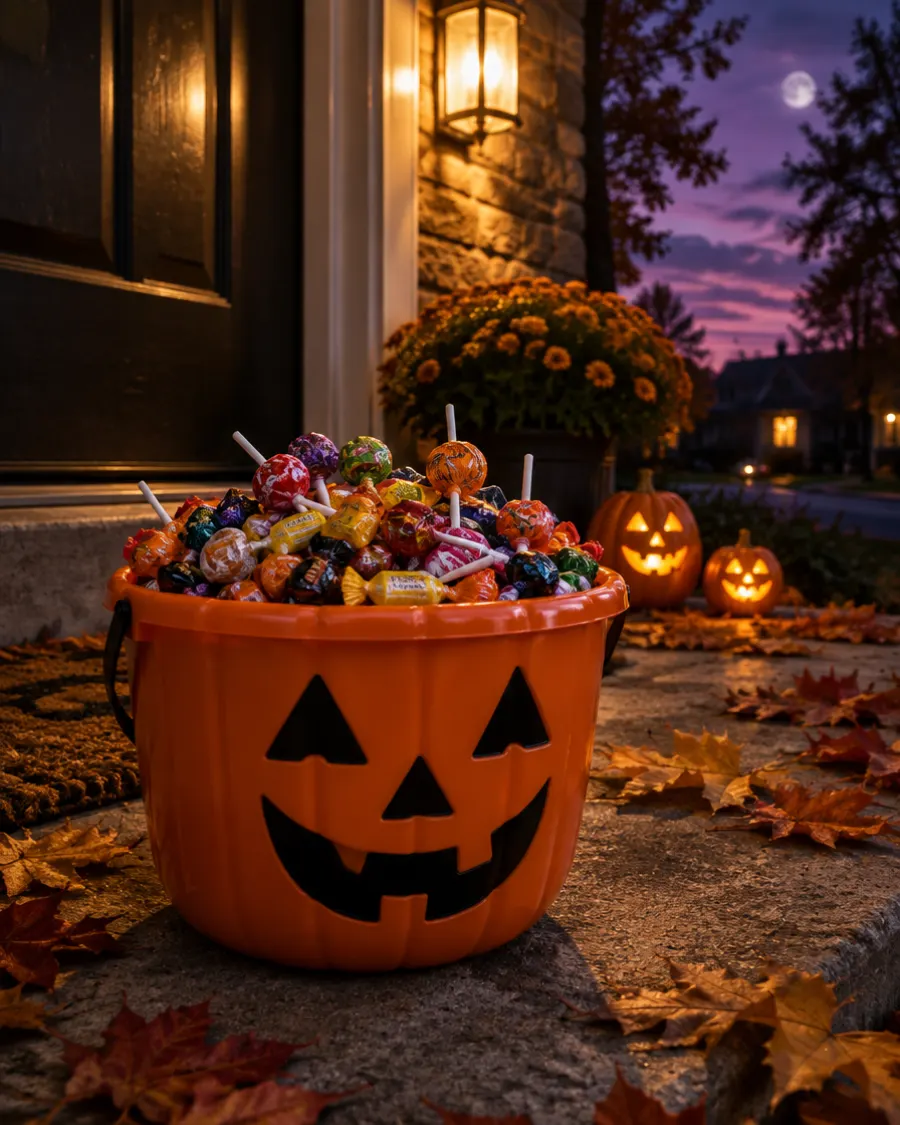
- Lollipops — easy to hand out and colorful. Choose ones with paper or sturdy sticks and avoid giving them to toddlers.
- Sour and novelty candy — powders, sour straws and candy “toys” are popular with older kids.
- Non-candy treats — stickers, glow sticks, pencils and small toys work for every child, including kids with allergies, diabetes or feeding tubes.
A mix works best: one bowl of popular chocolate, plus a bowl of allergy-friendly or non-food treats. That way every trick-or-treater gets something they can enjoy.
Advertisement
How much Halloween candy should I buy?
There is no perfect number — it depends on your neighborhood. A house on a busy street near a school may see a steady stream of kids, while a home at the end of a quiet road may only get a handful. Here is a simple way to estimate:
- 1Estimate your visitorsUse last year’s count if you kept track. If not, ask a neighbor or a local community group how busy your street usually is.
- 2Decide pieces per childMost households give 1 to 3 pieces per child. Two is a common, comfortable number.
- 3Multiply and add a cushionVisitors × pieces per child, then add about 10–20% extra for groups of siblings, late arrivals and generous moments.
- 4Check the bag countLook at the number of pieces printed on the bag, not just the weight, and divide your total by it.
Example: if you expect around 80 trick-or-treaters and give 2 pieces each, you need about 160 pieces — plus a cushion, roughly 180 to 190. Want to skip the math? Try our Halloween candy calculator.
If you run out, simply turn off your porch light — that is the universal signal that you are done for the night.
Allergy-friendly options and the teal pumpkin
Food allergies are common among American children, and many classic Halloween candies contain peanuts, tree nuts, milk, soy, wheat or eggs. Even candy without those ingredients may be made on shared equipment, so families managing allergies read every label carefully. Mini versions of a candy can also have different ingredients or factory conditions than the full-size bar.
The easiest way to help is to join the Teal Pumpkin Project: put a teal-painted pumpkin on your porch and offer non-food treats in a separate bowl. Good choices include glow sticks, stickers, mini bubbles, bouncy balls, crayons, temporary tattoos and spider rings.
Kids with allergies often trade or give away candy they cannot eat. Parents can “buy back” unsafe candy at home with a small toy or a special allergen-safe treat.
Candy safety for little kids
Toddlers and preschoolers can choke on many popular Halloween treats. Before little ones dig in, sort the bag and set aside anything that is small, hard, round or very sticky.
- Common choking hazards: hard candy, small round candies, jawbreakers, whole nuts, caramels and taffy, gum and lollipops.
- Remove tiny non-food items such as small toys, rings or erasers that could be swallowed.
- Check every wrapper. Throw out anything unwrapped, torn, homemade by strangers or that looks tampered with.
- Watch for loose candy and pets. Chocolate and sugar-free candy with xylitol are dangerous for dogs.
- Set a plan before the night — a couple of pieces after trick-or-treating, and the rest saved for later — to avoid tummy aches.
If a child is choking and cannot cough, cry or breathe, call 911 right away. Consider taking an infant and child CPR class before the holiday season.
Teeth, sugar-free candy and keeping it balanced
Halloween candy is part of the fun, and an occasional sweet night is not a disaster. A few habits help kids (and grown-ups) enjoy it without overdoing it:
- Eat a real meal first. A dinner before trick-or-treating means less snacking from the bag on the walk.
- Enjoy candy with or right after meals rather than grazing all day. Saliva produced during a meal helps rinse sugar from the teeth.
- Go easy on sticky and sour candy. Caramels, taffy and gummies cling to teeth, and very sour candy is acidic. Plain chocolate rinses away more easily.
- Drink water after candy and brush teeth before bed.
- Sugar-free candy is not a free pass. Many sugar-free sweets use sugar alcohols that can cause stomach upset if you eat a lot, and some contain xylitol, which is very dangerous for dogs.
- Plan for medical needs. Families managing diabetes or other conditions often work out a candy plan with their doctor ahead of time; non-food treats help these kids feel included.
Many families let kids pick a set number of favorites to keep, then use the rest for baking, trading or a buyback program.
How to store leftover Halloween candy
- Keep it cool and dry. A pantry or cupboard away from the stove, dishwasher and sunny windows works for most candy.
- Chocolate: store between roughly 60 and 70°F. If it gets warm, it can develop a whitish “bloom” — that is just fat or sugar rising to the surface and is still safe to eat.
- Freeze it for longer. Most chocolate bars, peanut butter cups and caramels freeze well in a sealed bag. Let them thaw in the bag to avoid condensation.
- Hard candy and lollipops keep for a long time but get sticky in humid air; keep them in an airtight container.
- Gummies and chewy candy can dry out and harden; seal them tightly.
- Check printed “best by” dates and toss anything with an off smell or texture.
What to do with leftover candy
Ended up with a mountain of candy? Here are some ideas:
- Candy buyback programs. In many communities, dental offices or local groups hold candy “buyback” events after Halloween, offering small prizes or cash in exchange for candy. Collected candy is often sent in care packages to service members, first responders or charities. Programs differ by area, so check locally to see what is offered and where the candy goes.
- Donate wrapped candy. Some food pantries, shelters, nursing homes and community groups accept sealed candy — call first, because not all can take it.
- Bake with it. Chop chocolate bars into cookies, brownies or pancakes, stir pieces into trail mix, or top ice cream. See our Halloween recipes for more.
- Use it for crafts and games. Candy makes good counters for math games, gingerbread house decorations or prizes at a Halloween party.
- Save some for later holidays. Frozen chocolate can turn up again in stockings or party favors.
- Try a family “switch” tradition. Some families let kids trade most of their candy for a toy or book overnight.
Frequently asked questions
How much candy do I need for trick-or-treaters?
Estimate how many kids will come, multiply by the number of pieces you plan to give each one (usually 1 to 3), then add 10–20% extra. For example, 80 kids at 2 pieces each is about 160 pieces, so buy roughly 180 to 190.
When was candy corn invented?
Candy corn was created in the 1880s in Philadelphia and is generally credited to George Renninger of the Wunderle Candy Company. It became closely tied to Halloween in the mid-20th century.
Can you freeze Halloween candy?
Yes. Most chocolate bars, peanut butter cups and caramels freeze well in a sealed bag. Thaw them inside the bag so moisture does not form on the candy.
What candy is a choking hazard for toddlers?
Hard candy, small round candies, jawbreakers, whole nuts, gum, caramels, taffy and lollipops are common choking risks for young children. Sort candy before toddlers eat any of it.
Advertisement