Updated Oct 26, 2026
Samhain: the Celtic roots
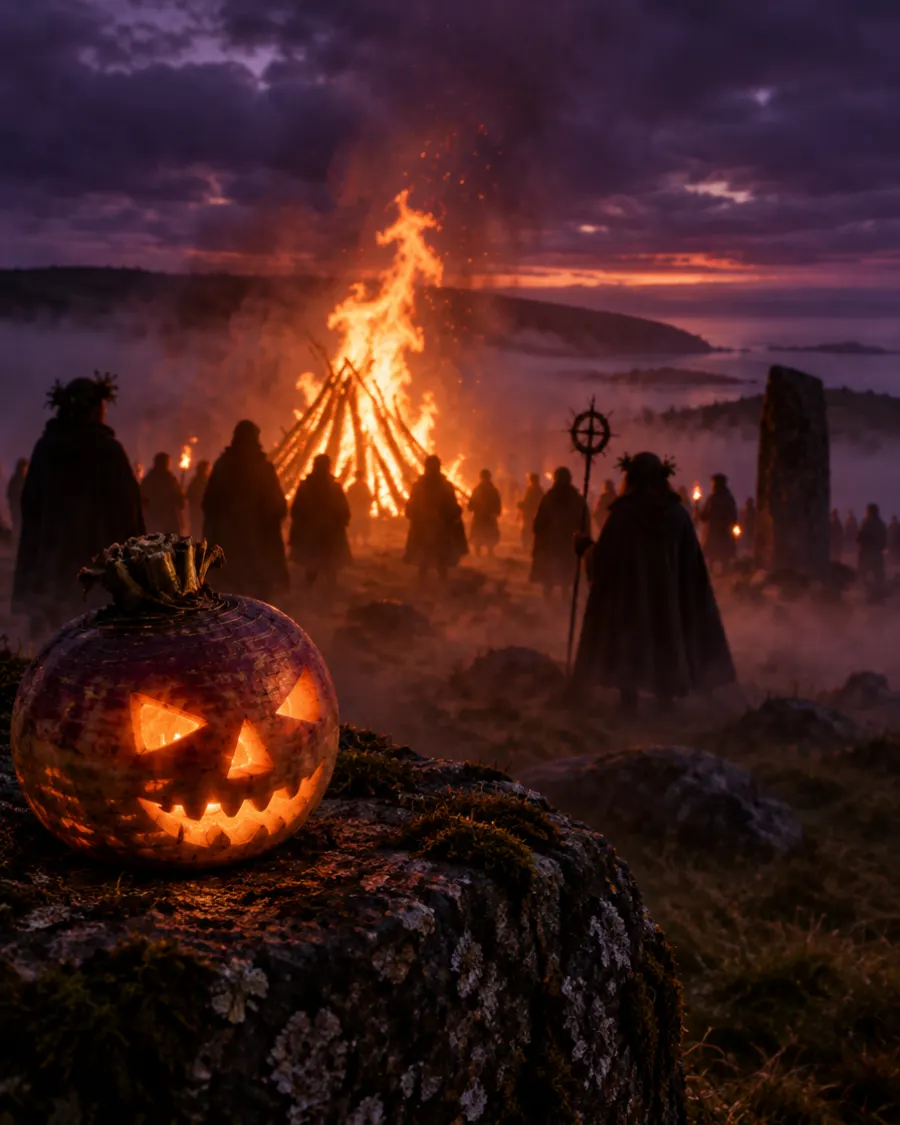
Halloween’s oldest roots reach back roughly 2,000 years to Samhain (pronounced “SOW-in”), a festival of the Celtic peoples of what is now Ireland, Scotland, Britain and northern France. Samhain marked the end of the harvest and the start of the dark half of the year. Many historians believe the Celts saw the night of October 31 as a time when the line between the living and the dead grew thin.
Communities lit large bonfires, gathered the last of the crops and brought livestock in from summer pastures. People are thought to have worn animal skins or disguises, partly to confuse wandering spirits — an early echo of the Halloween costume.
All Hallows’ Eve: how the name was born
As Christianity spread through Celtic lands, church holidays settled on top of older customs. In the 8th century, Pope Gregory III set November 1 as a day to honor all saints, known as All Saints’ Day or All Hallows (“hallow” is an old word for a saint or holy person). The evening before became All Hallows’ Eve, later shortened to Hallowe’en and finally Halloween.
Around the year 1000, All Souls’ Day on November 2 was added to remember the dead. Together these three days — Halloween, All Saints’ and All Souls’ — kept many of Samhain’s themes alive: bonfires, costumes and remembering those who had died.
Souling, guising and the first “treats”
In medieval Britain and Ireland, poor families and children went door to door on All Souls’ Day offering prayers for the dead in exchange for small round “soul cakes.” This was called souling. In Scotland and Ireland, young people practiced guising — dressing up and performing a song, poem or joke to earn fruit, nuts or coins.
These customs are the clearest ancestors of trick-or-treating: costumes, a knock on the door and a small reward.
Advertisement
Halloween comes to America
In colonial New England, strict Protestant beliefs limited Halloween celebrations. The holiday was more common in Maryland and the southern colonies, where harvest “play parties” mixed ghost stories, fortune-telling and dancing.
Everything changed in the mid-1800s. Millions of Irish immigrants, many fleeing the Great Famine of the 1840s, brought their Halloween traditions with them. Scottish immigrants added their own. Within a few decades Halloween spread across the country.
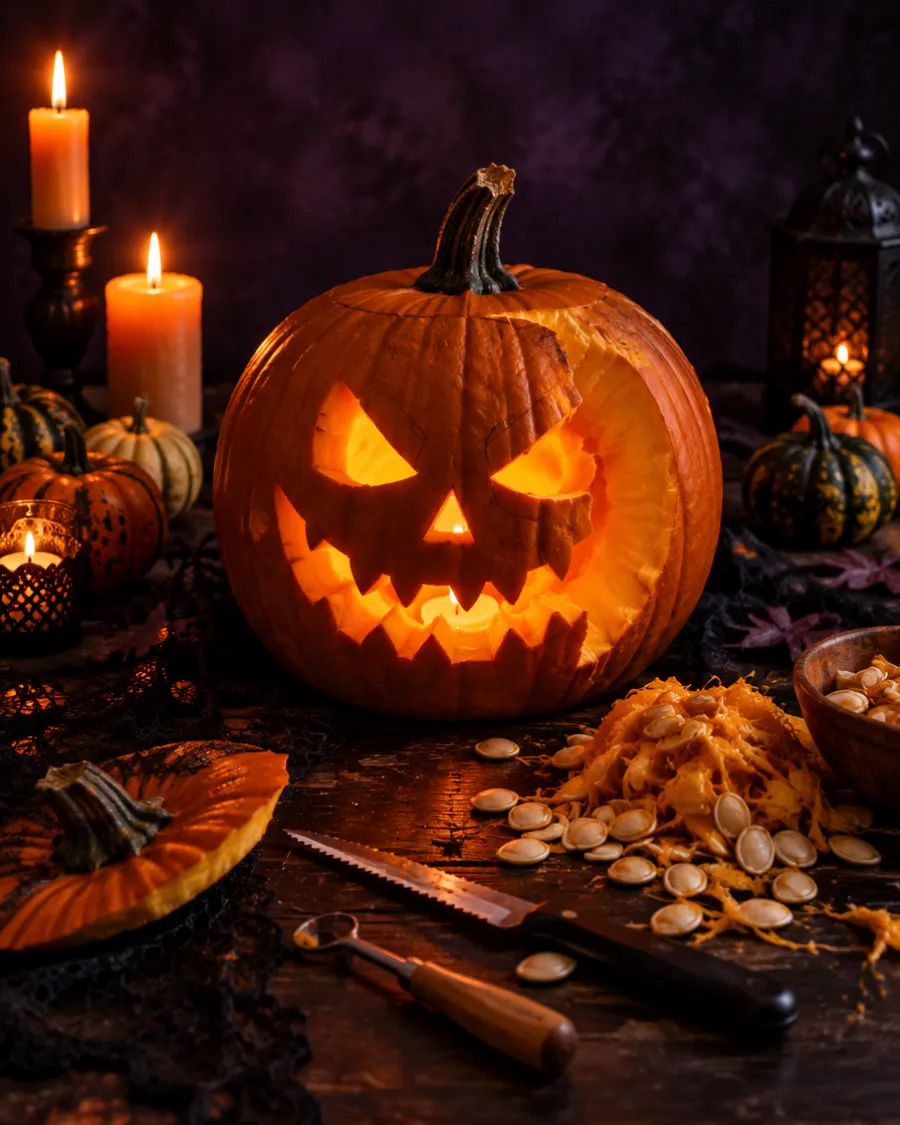
Back in Ireland and Scotland, people had carved lanterns from turnips and other root vegetables. In America, the native pumpkin was bigger and much easier to carve — and the jack-o’-lantern as we know it was born. Read the full legend in our jack-o’-lantern guide.
From pranks to community parties
By the late 1800s and early 1900s, American Halloween had a rowdy side: overturned outhouses, soaped windows and gates carried off. Towns pushed back by organizing safer fun. Anoka, Minnesota held a citywide celebration in 1920 to steer kids away from pranks and later began calling itself the “Halloween Capital of the World.”
Community leaders and newspapers encouraged parties, parades and games such as bobbing for apples, and Halloween slowly became a family-friendly holiday.
The rise of trick-or-treating
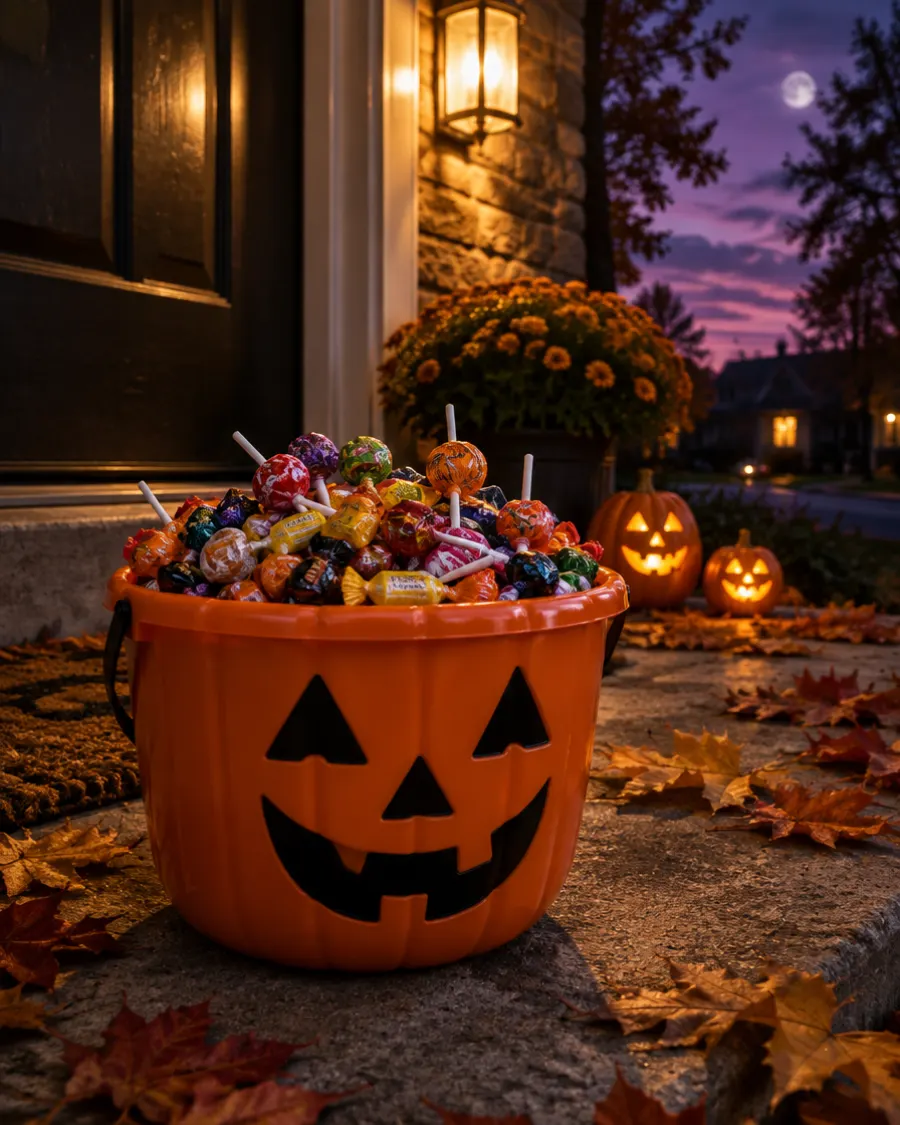
The phrase “trick or treat” shows up in print in North America in the 1920s and spread through the 1930s. Sugar rationing during World War II slowed things down, but in the baby-boom years after the war trick-or-treating exploded in new suburban neighborhoods. Candy companies, comic strips and TV shows helped make it a national ritual.
In 1950, children began carrying small boxes to collect coins for UNICEF while trick-or-treating — a tradition many families still keep.
Halloween in America today
Today Halloween is one of the biggest celebrations in the United States. It mixes many traditions: costumes for kids and adults, haunted houses and corn mazes, pumpkin patches, horror movie marathons and elaborate yard displays. Newer customs keep appearing — “trunk-or-treat” events in parking lots, the Teal Pumpkin Project for kids with food allergies, and “Halloween season” that now starts in September.
- 1~2,000 years agoCelts celebrate Samhain on October 31–November 1
- 28th centuryNovember 1 set as All Saints’ Day — the eve becomes All Hallows’ Eve
- 31840sIrish immigrants bring Halloween customs to the U.S.
- 41920Anoka, Minnesota holds a citywide Halloween celebration
- 51930s–1950sTrick-or-treating spreads across American neighborhoods
- 62010sTeal pumpkins and trunk-or-treats join the tradition
Frequently asked questions
Where did Halloween originate?
Halloween grew out of Samhain, a Celtic festival held around October 31 in Ireland, Scotland and nearby lands about 2,000 years ago. Later Christian holidays — All Saints’ Day and All Souls’ Day — blended with those customs.
Why is it called Halloween?
The name is a shortened form of All Hallows’ Eve, the evening before All Saints’ Day (All Hallows) on November 1.
Who brought Halloween to America?
Irish and Scottish immigrants, especially the large wave of Irish immigrants in the mid-1800s, spread Halloween traditions across the United States.
Advertisement